
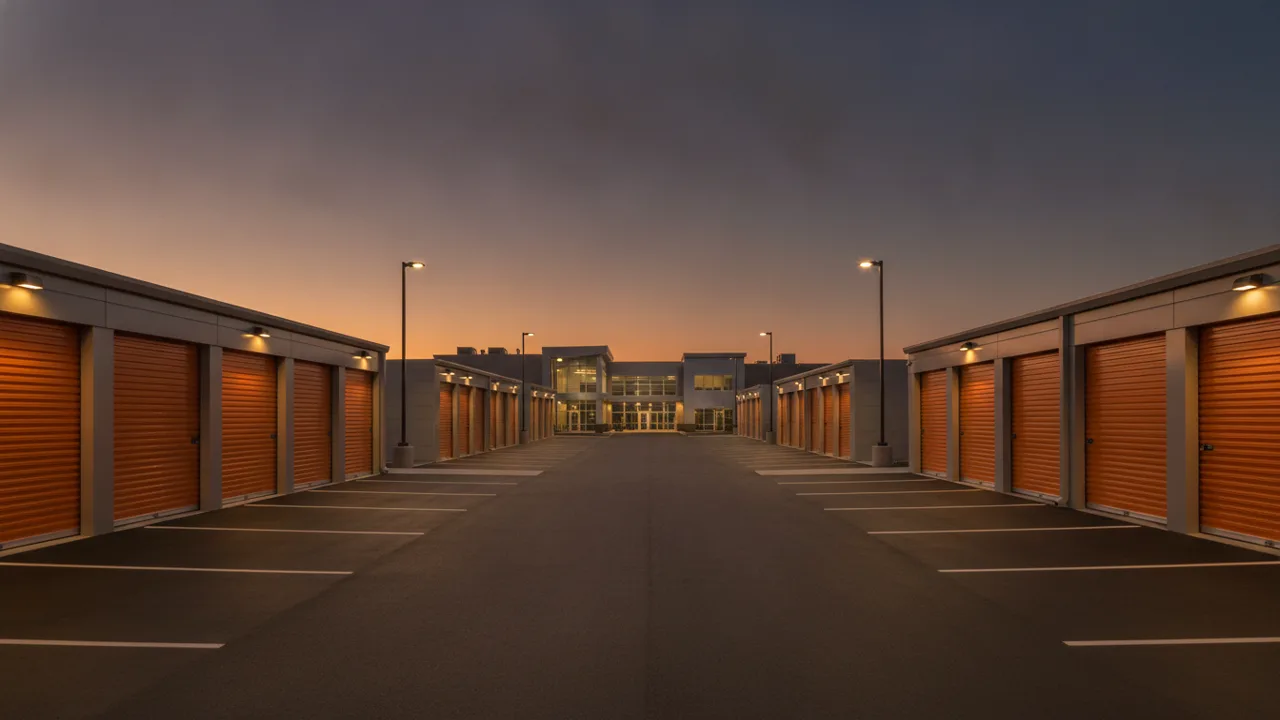
Self-Storage Facility Loans
Self-storage is one of the most recession-resilient commercial real estate asset classes. It performs well in every phase of the economic cycle: people downsize in recessions and buy in expansions, creating storage demand either way. Lenders reflect this — self-storage typically gets favorable LTV, tight DSCR, and competitive pricing.
We finance acquisitions, refinances, cash-out, and construction-to-permanent on self-storage across all U.S. states.
Check Self-Storage Loan Eligibility Talk to a Self-Storage Specialist — (833) 350-9185Quick answer: Self-storage facility loans finance one of the most recession-resilient commercial asset classes — demand holds in both downturns and expansions. Qualified on the facility’s cash flow, not personal income. Available nationwide.
Program Highlights
| Feature | Typical Range |
|---|---|
| Loan amounts | $500,000 – $15,000,000+ |
| LTV | Up to 75% (stabilized); 70% lease-up |
| DSCR minimum | 1.25 (stabilized); 1.15 (lease-up) |
| Amortization | 25 years |
| Term | 5, 7, 10-year balloon |
| Minimum occupancy | 80% physical, 85% economic (stabilized) |
| Climate-controlled mix | Higher climate-controlled = better pricing |
| Recourse | Recourse under $1.5M; non-recourse above typical |
Types of Self-Storage Deals
Stabilized Acquisition
Existing facility operating at 80%+ physical occupancy with 12+ months of consistent performance. Underwrites on trailing NOI. Highest LTV, tightest pricing, quickest close.
Lease-Up / Value-Add
Facility in lease-up period (newer construction) or under-managed asset being repositioned. LTV drops 5-10%, DSCR threshold eases slightly to allow for pro-forma stabilization. Often structured as bridge-to-perm.
Construction-to-Permanent
Ground-up self-storage construction with a permanent loan take-out. Loan starts as construction draws during build, converts to permanent at certificate of occupancy + 80% occupancy stabilization.
Portfolio Loans
Multiple self-storage facilities under one credit facility, often cross-collateralized. Available for operators with 3+ properties. Streamlines debt management at portfolio scale.
Who Buys Self-Storage
- Operators scaling from 1 facility to 3–10 facility portfolios
- Passive investors seeking low-management cash-flow real estate
- 1031 exchange buyers moving equity into a recession-resilient asset
- Institutional platforms acquiring existing independent facilities
- Developers building new self-storage in growth markets (construction-to-perm)
- Syndicators and funds raising capital for storage-focused strategies
Sample Scenario: Stabilized Facility Acquisition
350-Unit Self-Storage, Phoenix AZ
- Property: 65,000 rentable SF, 80% climate-controlled, 88% physical occupancy, built 2008
- Purchase price: $6,800,000
- Down payment: $1,700,000 (25%)
- Loan amount: $5,100,000
- Gross annual revenue: $780,000
- Operating expenses (35% OER): $273,000
- NOI: $507,000
- Debt service (25-yr): $410,000/yr
- DSCR: $507,000 ÷ $410,000 = 1.24
- Result: Approved. Strong Phoenix submarket, favorable climate-control mix, experienced sponsor.
What Lenders Look For
- Physical vs economic occupancy — both should be in the 80–90%+ range for stabilized deals
- Climate-controlled unit mix — higher % = better rate-per-SF and stickier tenant base
- Lease mix — percentage of units on existing long-term tenants
- Rate per SF vs submarket — shows pricing power
- Management platform — self-managed small owners vs REIT-managed vs third-party managed
- Submarket population growth — storage demand correlates with household formation and relocation
- Competitive supply within 3-5 mile radius — overbuilt submarkets get lower LTV
- Historical operating statements — 2+ years of T-12 and T-24 data
Why Self-Storage Is Favored
- Recession-resilient — demand holds in downturns (downsizing, job losses, relocations all create storage need)
- Low management intensity — after stabilization, single manager can run 200+ unit facility with minimal on-site staff
- Sticky customers — average customer tenure runs 12-24 months; switching costs (moving the stuff) keeps them in place
- Inflation pass-through — monthly month-to-month pricing allows rapid rent increases with market
- Scalable — operational playbook replicates well across facilities
- Exit liquidity — institutional buyers (Public Storage, Extra Space, CubeSmart) actively acquire mid-market facilities
Frequently Asked Questions
Related Commercial Products
- Commercial Loans Hub — Full overview
- Multi-Family Loans — Passive cash-flow apartment alternative
- Mixed-Use Loans — Retail/residential combinations
- Office Loans — Multi-tenant and owner-user office
- Retail Loans — Strip centers and NNN passive income
- Industrial Loans — Adjacent asset class
- Hard Money Loans — Bridge for value-add storage
1st Nationwide Mortgage, NMLS 1281. Self-storage facility loans subject to property, sponsor, and market underwriting. Programs vary by facility size, occupancy, and sponsor experience. Not all applicants or properties will qualify.
Ready to Get Started?
Talk to a licensed loan officer about your options — no obligation.