
Commercial Industrial Loans
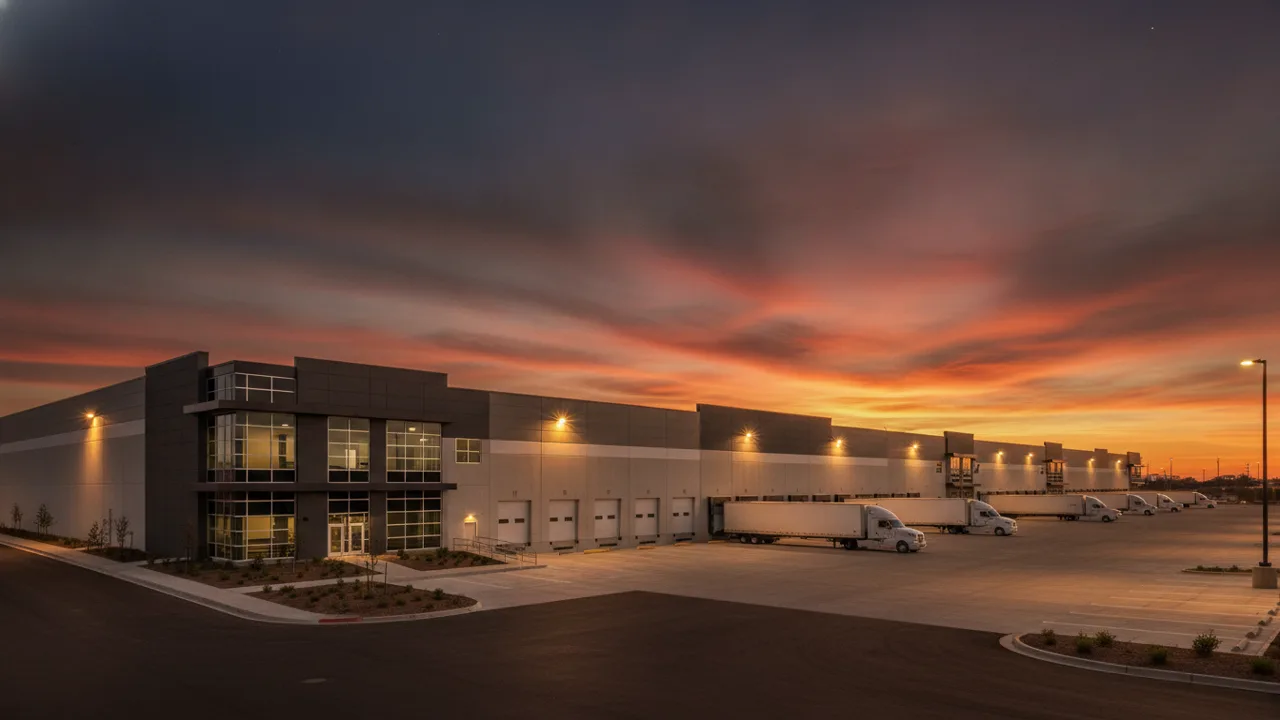
Industrial real estate — warehouse, flex space, light industrial, last-mile logistics, and distribution — has been one of the best-performing commercial asset classes of the last decade. E-commerce, onshoring, and supply-chain restructuring keep demand high in most markets.
Lenders reflect this: industrial typically gets better LTV, tighter DSCR, and longer terms than general office or retail. If your deal is stabilized industrial with credit tenants, this is one of the most favorable commercial financing categories.
Check Industrial Loan Eligibility Talk to an Industrial Specialist — (833) 350-9185Quick answer: Industrial loans finance warehouse, flex space, light industrial, last-mile logistics, and distribution property — qualified on the property’s cash flow, not personal income. Available nationwide.
Program Highlights
| Feature | Typical Range |
|---|---|
| Loan amounts | $500,000 – $15,000,000+ |
| LTV | Up to 75% (stabilized); 70% value-add |
| DSCR minimum | 1.20–1.25 |
| Amortization | 25 years |
| Term | 5, 7, 10-year balloon |
| Minimum occupancy | 85% stabilized |
| Ceiling height | 22-32’ is modern; older 16-22’ prices tighter |
| Recourse | Recourse under $2M; non-recourse above typical |
Industrial Sub-Types
Bulk Warehouse / Distribution
200,000+ SF, 32’+ clear height, dock-high loading. Used for regional distribution. Tenants tend to be large corporate (Amazon, FedEx, Walmart DC, national 3PLs). Institutional asset class.
Last-Mile Logistics
Smaller urban warehouse (50,000–150,000 SF) positioned for same-day delivery. In-demand due to e-commerce growth. Typically tighter cap rates than traditional industrial.
Light Industrial / Flex
Smaller footprint (10,000–80,000 SF), lower clear height (16-22’), flexible build-out (partial office, partial warehouse). Tenants: small manufacturers, contractors, supply companies, distribution arms of regional businesses. Strong small-investor category.
Single-Tenant Industrial NNN
Credit tenant on long lease (10–20 years) — essentially a corporate bond wrapped in real estate. Priced aggressively.
Who Buys Industrial
- Small-to-mid-cap investors in light industrial and flex
- Institutional buyers in bulk warehouse and last-mile
- Owner-users where the business is a manufacturer, distributor, or contractor needing warehouse + office (often SBA 504)
- 1031 exchange buyers moving into industrial for its favorable pricing and passive cash flow
- Value-add industrial investors buying older buildings to renovate or re-tenant
Sample Scenario: Light Industrial Flex Building
40,000 SF Flex Building, Houston TX
- Property: Single-tenant flex (25% office / 75% warehouse), 24’ clear height, 4 dock doors, built 1998
- Tenant: Regional electrical supply distributor, 10-year lease with 5-year option
- Purchase price: $3,600,000
- Down payment: $900,000 (25%)
- Loan amount: $2,700,000
- NNN rent: $28,000/month ($336,000/yr)
- NOI: $325,000 (small landlord reserve)
- Debt service (25-yr): $218,000/yr
- DSCR: $325,000 ÷ $218,000 = 1.49
- Result: Approved. Single-tenant credit, long lease, favorable pricing.
What Makes Industrial Underwrite Well
- Clear height — 32’+ is modern institutional; 24’+ is solid; below 22’ is older-generation
- Dock doors per SF — more docks = more usability for logistics
- Column spacing — wider spacing is more flexible
- Truck court depth — 130’+ is standard for modern logistics
- Power — heavy industrial needs 3-phase, amp capacity
- Tenant quality and lease term — usual commercial considerations
- Location — highway access, proximity to population centers and ports
Frequently Asked Questions
Related Commercial Products
- Commercial Loans Hub — Full overview
- Multi-Family Loans — 5+ unit apartment buildings
- Mixed-Use Loans — Retail/office + residential combinations
- Office Loans — Flex-office combinations
- Retail Loans — Strip centers and NNN properties
- Self-Storage Loans — Specialized industrial-adjacent asset
- Hard Money Loans — Bridge for value-add industrial
1st Nationwide Mortgage, NMLS 1281. Commercial industrial loans subject to property, tenant, and sponsor underwriting. Loan terms vary by building quality, tenant credit, and loan size. Not all applicants or properties will qualify.
Ready to Get Started?
Talk to a licensed loan officer about your options — no obligation.