
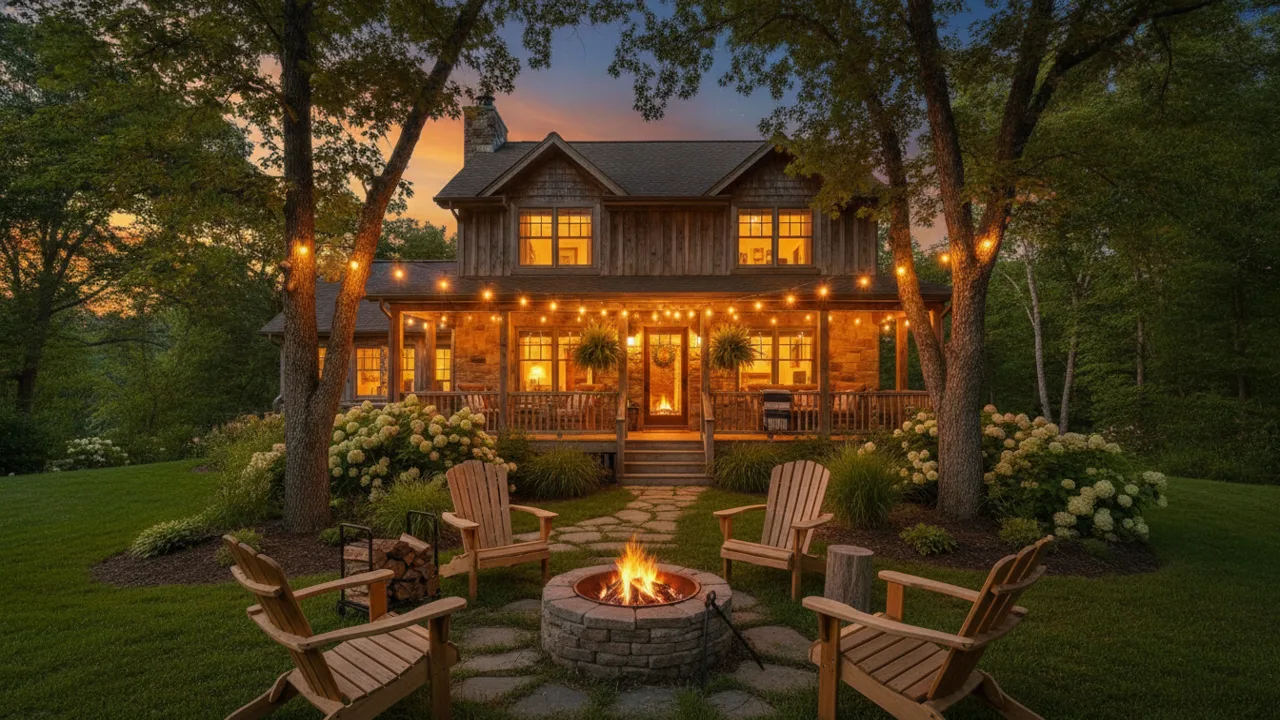
Airbnb & Short-Term Rental Loans (DSCR)
Buying or refinancing a short-term rental property — Airbnb, VRBO, Booking.com, or a direct-book vacation rental — is a different animal from buying a primary home. Traditional mortgage underwriters can’t count your projected Airbnb income, your tax returns show depreciation losses, and most lenders won’t even let you close the loan in an LLC.
DSCR loans solve all three problems. Qualify on the property’s short-term rental income — no personal tax returns, no W-2s, LLC vesting allowed, loans up to $5M.
Check Airbnb / STR Loan Eligibility Talk to an STR Loan Specialist — (833) 350-9185How STR / Airbnb DSCR Loans Work
A DSCR (Debt Service Coverage Ratio) loan qualifies you based on the property’s rental income, not your personal income. The formula:
DSCR = Gross Monthly Rental Income ÷ Total Monthly PITIA (principal, interest, taxes, insurance, HOA)
For traditional long-term rentals, DSCR uses a signed lease or market rent appraisal. For short-term rentals, lenders accept:
- 12 months of actual Airbnb / VRBO / PMS income — booking history, payout statements, or tax documents from the property (if operating)
- AirDNA projection reports — for properties being purchased that don’t have a personal track record yet
- Appraiser’s Rent Schedule (Form 1007) — long-term market rent, often used as a conservative fallback
Most lenders will use the higher of the two valid income sources. If the property has a strong existing Airbnb history, that’s used. If not, AirDNA projections typically fill the gap.
How AirDNA Projections Are Built
AirDNA is the primary STR data platform used by DSCR lenders when a property has no personal performance history. Understanding how the projection is constructed helps set realistic expectations at underwriting.
AirDNA pulls from active listings in a defined comp set — typically within a 1–5 mile radius with matching property attributes (bedrooms, property type, permit status, amenity profile). Its revenue estimate is built from three inputs:
- Occupancy rate — the percentage of available nights booked by comparable listings, trended over 12 months and seasonality-adjusted
- Average daily rate (ADR) — the nightly rate actually achieved in bookings (not listed price) across the comp set
- Revenue per available night (RevPAN) — occupancy × ADR; the figure DSCR lenders anchor to for gross monthly income
AirDNA weights recent months more heavily than older data and adjusts for seasonal patterns (summer peak, winter shoulder, holiday surges). The resulting projection is a market-typical gross for a properly listed and managed property in that sub-market.
What AirDNA does not control for: listing quality, review score, management responsiveness, or pricing strategy. A well-managed listing in an active market will often outperform the projection; a poorly managed one may not reach it.
For underwriting purposes: the lender treats the AirDNA gross as market rent for the STR asset class in that location — the same role a Form 1007 plays for long-term rentals. They are evaluating the market, not your management skill.
At a DSCR of 1.00, rental income covers the mortgage payment exactly. Above 1.00 is positive cash flow. Minimum for most STR DSCR programs: 1.00 (some programs go as low as 0.75 for strong borrowers).
Why Most Traditional Lenders Won’t Do Airbnb Loans
Conventional Fannie/Freddie loans struggle with STR properties for several reasons:
- Income can’t be counted without 2 years of tax returns showing the STR income — which excludes all new investors
- Most loans require occupancy certification (owner-occupied or primary residence) — STR properties aren’t that
- Depreciation reduces taxable rental income — so even investors with profitable Airbnbs show a loss on their 1040s, making conventional DTI impossible
- LLC ownership not allowed — most Airbnb investors want LLC for liability and portfolio management
- 10-property cap — conventional investor loans cap at 10 financed properties, cutting off growth
DSCR non-QM financing sidesteps all five issues.
STR DSCR Loan Requirements
| Feature | Standard STR DSCR | Jumbo STR DSCR |
|---|---|---|
| Loan amounts | $100K-$1.5M | Up to $5M |
| FICO | 640+ | 680+ |
| Purchase LTV | Up to 80% | Up to 75-80% |
| Cash-out LTV | Up to 75% | Up to 70% |
| Minimum DSCR | 1.00 | 1.00-1.15 |
| Income docs | None | None |
| Vesting | LLC or personal | Same |
| Property types | SFR, condo, 2-4 unit | Same |
| Reserves | 3-6 months | 6-12 months |
Common STR DSCR Scenarios
Purchase: existing Airbnb with 12-month track record
- Purchase price: $525,000 (3BR mountain cabin, permitted STR)
- Down payment: $131,250 (25%)
- Loan amount: $393,750
- 12-month Airbnb gross: $62,400 (~$5,200/month)
- Monthly PITIA: $3,850
- DSCR: $5,200 / $3,850 = 1.35
- Result: Approved, strong ratio. Closed in LLC, no personal tax returns.
Purchase: new acquisition, no STR history
- Purchase price: $380,000 (2BR beach condo)
- AirDNA projection: $3,900/month gross (conservative comp-based)
- Appraiser Form 1007 (long-term): $2,600/month
- DSCR uses: $3,900/month (higher of two valid sources)
- Monthly PITIA: $3,200
- DSCR: $3,900 / $3,200 = 1.22
- Result: Approved using AirDNA projection. If AirDNA projection hadn’t been high enough, loan could still close with long-term rent fallback at lower DSCR or different program structure.
Cash-out refinance: converting long-term to STR
- Current value: $680,000 (ski-town condo, just permitted for STR)
- Current mortgage: $280,000
- Cash out to: 70% LTV = $476,000 loan
- Cash to borrower: $196,000
- Projected STR income: $5,800/month
- Projected PITIA on new loan: $4,900
- DSCR: 1.18
- Result: Approved. $196K cash out at 70% LTV, funds used to acquire next STR property.
Illustrative Case Study — California Coastal STR Purchase
Illustrative scenario in a program-available state. Numbers are market-typical, not an actual transaction. Not a guarantee of terms or approval.
- Property: 3BR condo, Pismo Beach, CA
- Purchase price: $875,000
- Down payment: $218,750 (25%)
- Loan amount: $656,250
- AirDNA projected gross: $8,200/month (based on 68% occupancy × ~$400 ADR in the comp set, seasonality-adjusted)
- Appraiser Form 1007 (long-term rent): $4,100/month
- Income used for qualifying: $8,200/month (higher of the two valid sources)
- Estimated monthly PITIA (including HOA): $6,800
- DSCR: $8,200 ÷ $6,800 = 1.21
- Vesting: Single-member LLC; no personal tax returns; no employment verification
- Result: Approved at 75% LTV. Closed in 27 days.
Key factor: the AirDNA STR projection ($8,200/month) was nearly double the Form 1007 long-term rent ($4,100/month). At the long-term rent, DSCR would have been 0.60 — below threshold on any standard program. The STR income methodology — and the lender’s willingness to accept it — is what made this purchase qualify.
STR-Specific DSCR Considerations
Permit status is critical. STR regulations vary wildly by city and county. Before lending, most DSCR programs verify the property can legally operate as a short-term rental:
- Does the jurisdiction allow non-owner-occupied STR?
- Is there an annual permit? Has it been issued or renewed?
- Are there booking limits (e.g., 90 or 120 day caps) that would reduce income?
- Are there HOA or condo-association STR prohibitions layered on top?
Underwrite around legal income. If the city caps STR bookings at 120 nights/year, your annualized income should reflect that cap. Never assume 365-night occupancy in a regulated market.
Shoulder season / seasonal income matters. Ski towns, beach destinations, and wine country have highly seasonal income. Lenders typically average across 12 months so a spring/fall dip isn’t a problem — but it must be factored into projections.
Property management fees are a real cost. If you use a PM company (typical 20-30% of gross), factor that into your net cash flow thinking, though DSCR is calculated on gross rent.
Furnishing and startup costs are not financed. DSCR loans cover the real estate — not the $20-60K you’ll spend furnishing and ramping up an Airbnb. Budget for it separately.
Closing in an LLC — standard practice for STR investors. Unlike conventional investment property loans, DSCR loans are designed for entity ownership from the start. You can close an STR property in a single-member LLC, multi-member LLC, limited partnership, or revocable trust. The entity does not need its own operating history or separate tax return — the property’s cash flow is the qualifying asset, not the entity’s financials.
Most STR investors use one of two structures: a new single-purpose LLC per property (maximum liability isolation between assets), or a portfolio LLC per market (fewer entities to manage). Either works. The lender takes title in the entity name; the individual(s) sign personally as guarantors.
LLC vesting on a DSCR loan does not change the qualification criteria, the income methodology, or the LTV. It is not a workaround or a special program — it is the default structure for serious STR investors, and DSCR lenders underwrite it routinely.
STR-Friendly Markets We Finance In
Short-term rental dynamics vary. Some markets have strong STR demand + loose regulation; others have strong demand + aggressive regulation; others have light demand + loose regulation. We finance DSCR STR in most states where we originate DSCR.
Strong STR demand + generally permissive:
- Texas — Dallas, Austin, Houston, San Antonio (city-specific rules apply), Fredericksburg, Hill Country, Galveston, South Padre
- Florida — Orlando area (Disney proximity), Miami, Tampa, Panhandle, Keys
- Tennessee — Nashville, Smoky Mountains (Gatlinburg, Pigeon Forge), Chattanooga
- North Carolina — Asheville area, Outer Banks, mountain markets
- Georgia — Atlanta, Savannah, Blue Ridge
Strong STR demand + more regulated (verify permit before underwriting):
- California — select coastal + mountain markets where permitted (Big Bear, Mammoth, Sonoma, Palm Springs)
- Arizona — Scottsdale, Sedona, Flagstaff
- Colorado — Breckenridge, Vail, Aspen, Telluride, Steamboat
Caution markets (STR heavily restricted or prohibited):
- Los Angeles, San Francisco — effectively primary-residence-only for STR
- New York City — Local Law 18 prohibits most STR in multi-unit
- Much of Hawaii — county-by-county restrictions; verify carefully
Always verify the specific property’s permit status BEFORE committing.
Frequently Asked Questions
Get Started
Ready to finance an Airbnb or short-term rental? Call (833) 350-9185 or check eligibility .
See also: DSCR Loans (main program) · California DSCR · Texas DSCR · Bank Statement Loans · NONI Investment Loans
Ready to Get Started?
Talk to a licensed loan officer about your options — no obligation.