
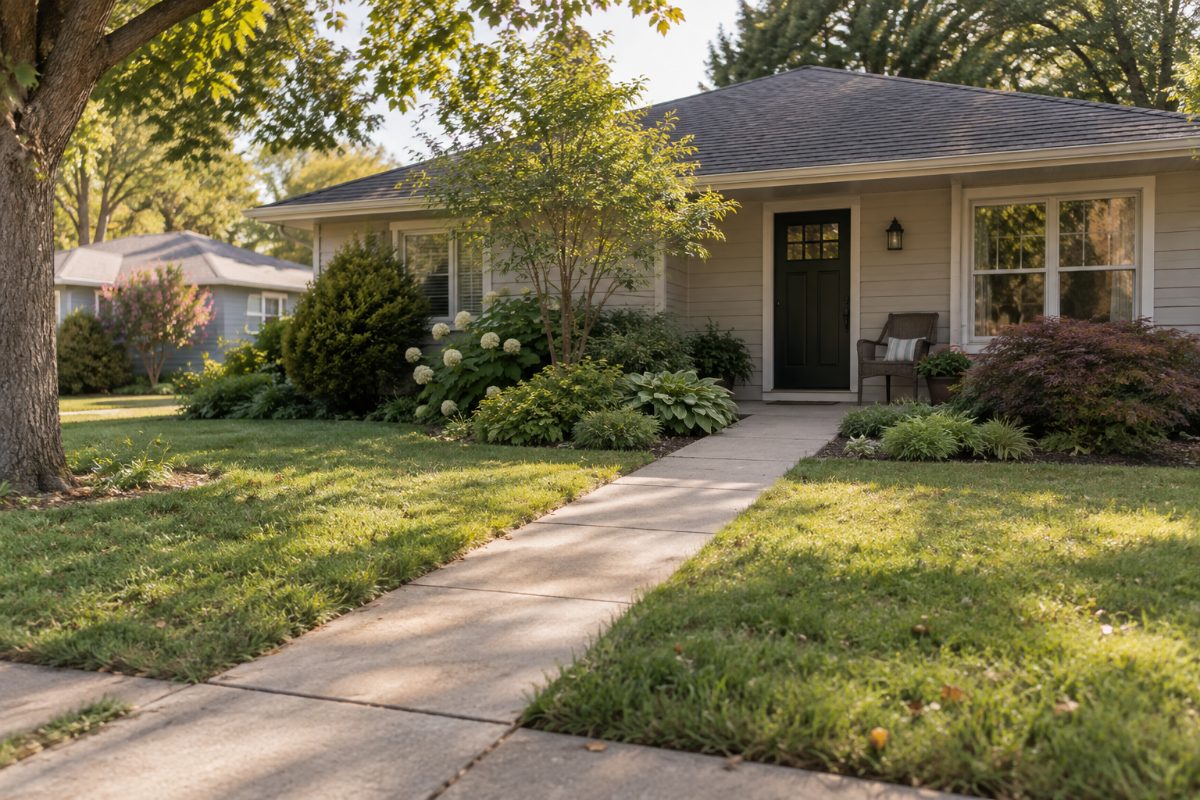
They sold the two-story in March. Forty-one years in that house, and by the end they were sleeping in what used to be the dining room, because the stairs had stopped being worth the trip. He was 74. She was 71. The house went for $640,000 and they walked with about $605,000 after the commission and the roof credit the buyer pried out of them.
Then came the part nobody prepares for.
The single-story they wanted, eleven minutes from their daughter, was listed at $520,000. Pay cash and they own it outright with roughly $85,000 left in the bank. That is the entire cushion for two people in their seventies.
They did not pay cash. They bought that house with a HECM for Purchase, put a little under $300,000 down, and kept the rest liquid. Whether that was smart depends on facts I will get to. This is the right tool for some households and clearly wrong for others. I will tell you which one you are.
What is a HECM for Purchase?
It is one transaction that does two things at the same table: it buys the house, and it places a reverse mortgage on that house the same day. HECM stands for Home Equity Conversion Mortgage, the reverse mortgage program insured by FHA under HUD rules. Most people only hear about it in the other direction, on a house they have owned for thirty years. H4P runs the same machinery at the moment of purchase.
The buyer brings a large down payment. The loan covers the rest of the price. There is no required monthly mortgage payment as long as the borrower keeps up the required property obligations, which I will hammer on more than once because that is the part the television ads leave on the cutting-room floor.
Before H4P existed, a senior who wanted this had to buy with cash and put a reverse mortgage on the house afterward. Two closings, two sets of costs. One transaction instead of two is the point of the program.
If the mechanics are new to you, start with how a reverse mortgage works. This post assumes you know the balance grows over time instead of shrinking.
Who is eligible to use H4P?
You have to be 62 or older. Not negotiable, not waivable, not something a good originator works around. Every borrower on title clears that bar or there is no loan.
Where it gets delicate is the couple with an age gap. If one spouse is 64 and the other is 59, the younger one cannot be a borrower. Program rules allow that person to be identified as an eligible non-borrowing spouse, with protections about remaining in the home after the borrowing spouse dies. It also carries real limitations and changes the numbers. I have talked more than one couple into waiting two years. Waiting is free. Unwinding a loan is not.
There is also a financial assessment, which surprises people. This is not a no-underwriting loan. The lender reviews income and credit with one narrow focus: has this borrower paid property taxes and homeowners insurance on time? If that history is shaky, program rules allow part of the loan to be set aside for those charges, which raises the cash you bring.
How much do you have to bring to the table?
A substantial amount, and more than most people expect. The required investment moves with the age of the youngest borrower, the purchase price, and market conditions on the day you lock, so anyone quoting a flat figure over the phone is guessing. Older borrowers bring less. Younger ones bring more.
Where the money comes from is tightly defined. Sale proceeds from the prior home, savings, investment accounts, retirement distributions, and gifts that follow program rules. What it cannot be is borrowed money. No seller carryback, no unsecured loan, no credit line opened to manufacture a down payment.
Here is how their arithmetic looked. Illustration only, not a quote.
| Path | Cash into the house | Cash still liquid | Required monthly mortgage payment |
|---|---|---|---|
| Pay cash for the $520,000 home | $520,000 | About $85,000 | None |
| H4P on the same $520,000 home | Just under $300,000 | About $305,000 | None, while required obligations are met |
Same house, same street, same absence of a monthly mortgage payment. The difference is roughly $220,000 sitting in an account instead of in drywall, against a loan balance that grows on the house over time. That trade is the entire decision.
One note on the money. Reverse mortgage proceeds are generally not treated as taxable income because they are loan proceeds rather than earnings. I am not your tax advisor. Confirm the specifics with your own, particularly if the down payment comes out of a retirement account, because that distribution is a separate question with its own bill attached.
What does "no required monthly mortgage payment" actually mean?
It means principal and interest are not billed to you monthly. It does not mean the house is free to hold.
You stay responsible for the required property obligations as long as the loan is in place:
- Property taxes, paid in full and on time.
- Homeowners insurance kept continuously in force, plus flood coverage where required.
- HOA dues and any special assessment the association levies.
- Maintaining the property to the condition the program requires. A failing roof is not a cosmetic issue to your servicer.
Fall behind and the loan can be called due and payable. That is spelled out in the note you sign, and it is the most common way these loans end badly. A borrower barely covering the tax bill gets hit with an insurance increase, lets the policy lapse, and the file goes sideways.
So price the house honestly: taxes, insurance, HOA dues, and a real maintenance number. Ask whether that total is comfortable on your monthly income. Not tight. Comfortable. The CFPB guide is worth an hour before you sit with anyone selling one of these: CFPB on reverse mortgages.
What kind of house can you actually buy with it?
One you are going to live in. It has to be your primary residence, you generally occupy it within 60 days of closing, and occupancy is a continuing condition for the life of the loan rather than a box you check once at signing.
That rules out the beach place, a house bought for an adult child, and anything you intend to rent. Leave the home for more than twelve consecutive months, including a move into assisted living, and the loan becomes due and payable. That rule catches families off guard more than any other. Tell your kids now instead of letting them find it during a hospital stay.
The property has to meet FHA appraisal and condition standards. Single-family homes, FHA-approved condominium projects or units with individual approval, certain manufactured homes meeting construction and foundation requirements, and two-to-four unit properties where you occupy one unit. The appraiser looks at safety, soundness, and security: peeling paint, a deck with no railing, a roof at the end of its life.
On a purchase, required repairs generally have to be finished before closing. You do not close and fix it later. That becomes a negotiation with the seller, before you are in the house.
Pro Tip: Verify a condo project's FHA status before you tour it, not after your offer is accepted. I have watched more H4P deals die over condo approval than over any borrower issue.
Why does HUD require counseling before you can even apply?
Because the product has been abused, and counseling is the guardrail. You complete a session with an independent HUD-approved housing counselor and hold the certificate before an application goes anywhere. That counselor does not work for me and has no stake in whether you do this loan or walk away.
The session covers how the balance grows, what your obligations are, what alternatives exist, and what happens at the end. Counselors may charge for their time. The CFPB keeps a directory of HUD-approved housing counselors.
My own advice, which is not a program requirement: bring your spouse, and the adult child who will handle your affairs someday. The questions they ask are usually the ones that should have been asked.
What happens when you sell, move out, or die?
The loan becomes due and payable and the balance is satisfied out of the house. Those three events are the maturity triggers, along with failing to meet the required property obligations described above.
Usually the house is sold. The balance, which has been growing the whole time, comes off the top, and whatever equity remains goes to the borrower or the estate. If the property is worth less than the balance when it is sold to satisfy the loan, the HECM program is structured as non-recourse, so the family is not personally on the hook for the shortfall. I will not oversell that. The home is still the collateral and the obligations still have to be met along the way.
Heirs have choices. Sell and keep the remaining equity. Pay off the balance and keep the house, which is what happens when a child wants the family property. Or sign a deed in lieu and walk away. What they cannot do is nothing. There is a defined window, measured in months with extensions available under program rules, and estates that ignore the notices end up in foreclosure proceedings over a house that had equity in it.
Tell your kids the loan exists and which servicer holds it. Put it with the will.
Pro Tip: Write one page: lender, servicer, loan number, the phone number on the statement, and the sentence "this is a reverse mortgage and it must be addressed within months of my death." Just enough that nobody is reconstructing it from a shoebox.
When is H4P clearly the wrong choice?
When you are not going to stay. Up-front costs are meaningful, and spreading them over three years instead of fifteen makes them expensive per year of use. If you might move again soon, or you honestly do not know where you want to be in four years, rent for a while.
The other situations where I say no:
- The obligations are a stretch. If taxes, insurance, HOA, and upkeep would consume the household budget, this delays the problem and adds a lien.
- Preserving the house for heirs is the priority. A growing balance is in direct tension with that goal and no clever structure resolves it.
- You already have plenty of liquidity. Selling a house and buying smaller with seven figures left over? Pay cash.
- A spouse is under 62 and the numbers only work by leaving them off the loan.
- You want to spend half the year somewhere else. Occupancy is a continuing condition.
What is left is a narrower group than the advertising suggests. A household 62 or older, right-sizing to a home that fits how they live now, with enough income to carry the property comfortably, who would rather hold cash than tie it up in the walls. Look at the rest of our loan programs first, and read the pros and cons while you are at it.
What does the process look like from offer to keys?
Counseling first, then application, then the usual purchase sequence with extra steps stapled on.
- Complete the counseling session and get the certificate.
- Apply, and get the required investment figure tied to your real age and price range before you shop.
- Write the offer with a timeline that reflects the appraisal and any repair work.
- Appraisal, underwriting, and the financial assessment run in parallel.
- Close, bring the down payment as verified funds, occupy within 60 days.
Build in more calendar than a conventional purchase. Counseling, condo approval, and appraiser-called repairs each run on their own clock. More detail sits on our reverse mortgage page, and the office number is (833) 350-9185. We have been at this since 1990, A+ rated with the Better Business Bureau.
That couple has been in the single-story since June. The stairs were the reason they moved. Everything after that was arithmetic.
For illustration only. Not a commitment to lend. NMLS #1281. Equal Housing Lender.