
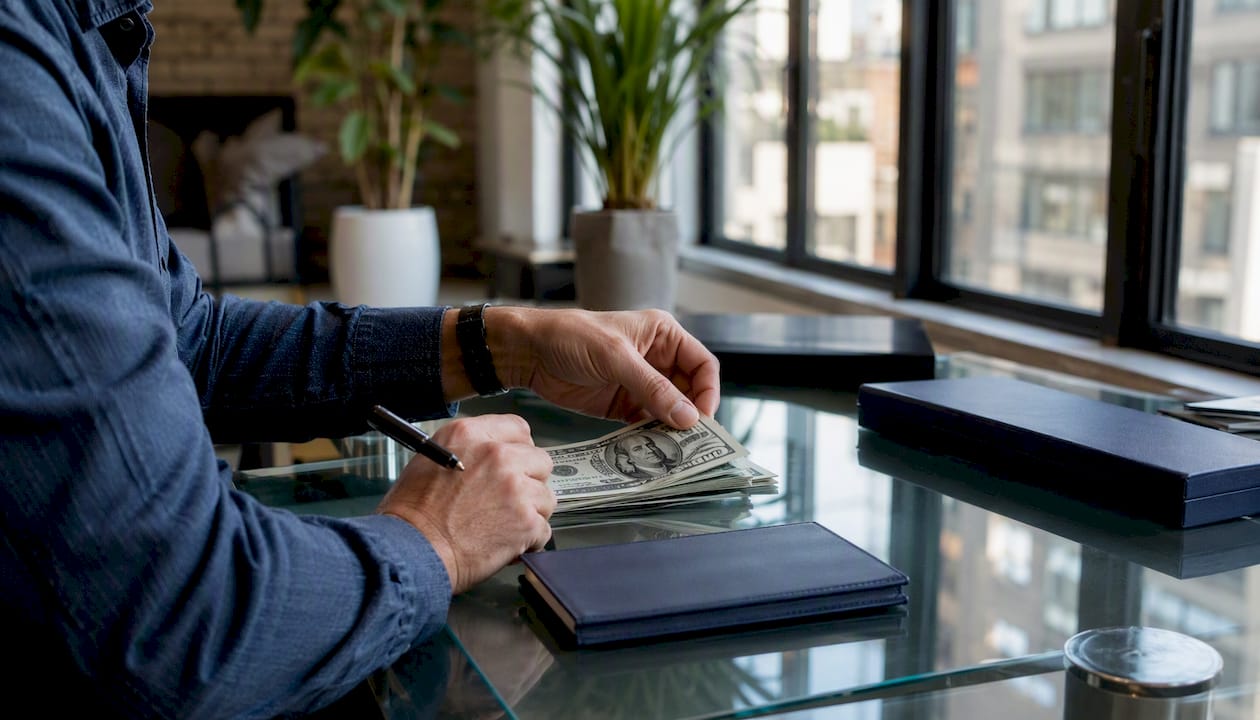
Escrow is a neutral third party that holds your purchase funds and documents, then releases them only when every written condition in your contract is met. For international buyers, that single protection is what separates a safe cross-border closing from a wired payment with no recourse. The International Trade Administration recognizes escrow as a standard intermediary mechanism for exactly this reason.
Core protections escrow gives you:
- Fund custody: Your money sits in a dedicated account, not with the seller.
- Synchronized transfer: Title and funds change hands at the same moment, on the same day.
- Written-instructions rule: Nothing moves without documented, agreed-upon authorization.
- Title clearance: The escrow holder confirms the property is free of liens before disbursing.
Your first move as an international buyer: gather proof-of-funds documentation and run a test wire to your U.S. bank account before you’re under contract.
Key Takeaways
Escrow protects international buyers by holding funds in a neutral account and releasing them only when every written condition, including title clearance, loan approval, and verified good funds, is satisfied.
| Point | Details |
|---|---|
| Start banking and KYC early | Open a U.S. bank account and complete KYC at least 4–6 weeks before your target closing date. |
| Run a test wire first | Send a small wire 3–4 weeks before closing to validate routing, SWIFT codes, and bank review speed. |
| Verify wiring instructions by phone | Call the escrow officer on a number from their official website before every wire, without exception. |
| Budget extra time for international closings | Add 1–2 weeks to the standard 30–45 day escrow timeline for wire prep, notarization, and AML review. |
| 1st Nationwide Mortgage for financing | NONI and DSCR loan programs serve foreign nationals and investors with no income documentation required. |
Table of Contents
- How escrow works for international buyers, step by step
- Who does what: parties in a U.S. escrow transaction
- How to move purchase funds from abroad into escrow
- Documents and compliance checks for international buyers
- What escrow costs and how long it takes
- Risks specific to international buyers and how to reduce them
- How to vet an escrow or title company from overseas
- How your mortgage financing interacts with escrow
- What international buyers consistently underestimate about escrow
- Financing options for international buyers purchasing U.S. property
- Sources
How escrow works for international buyers, step by step
The escrow workflow follows a predictable sequence, but each stage carries specific timing risks when you’re funding from abroad.
- Contract acceptance. The signed purchase agreement triggers escrow opening. The escrow holder receives a copy and creates a file.
- Earnest money deposit. You wire your earnest money, typically 1–3% of the purchase price, within 1–3 business days. International wires often take 3–5 business days, so initiate immediately.
- Title order. The escrow or title company orders a title search to identify liens, easements, or encumbrances that must be cleared before closing.
- Contingency period. Inspection, appraisal, and loan contingencies run concurrently. Your escrow officer tracks each deadline.
- Loan processing (if financing). Your lender submits a loan package to underwriting. For foreign nationals, this stage often requires translated documents and additional source-of-funds verification.
- Closing Disclosure / ALTA settlement statement. Three business days before closing, you receive a line-item breakdown of every fee and credit. Review it carefully against your earlier Loan Estimate.
- Final funding. You wire the remaining balance. The escrow officer verifies these as “good funds” before proceeding.
- Recording. The deed is recorded with the county. This is the legal moment of ownership transfer.
- Disbursement. Escrow releases funds to the seller, pays off any existing liens, and distributes fees to agents, title, and lender.
Where international buyers commonly hit delays: Steps 2, 5, and 7. Bank review of large international wires, document translation requirements, and last-minute lender conditions are the three most frequent causes of missed closing dates.
Pro Tip: Ask your escrow officer for the exact wire cutoff time on closing day. Most title companies require funds to arrive by noon local time to record same day. Missing that window by even one hour pushes recording to the next business day.
Who does what: parties in a U.S. escrow transaction
Escrow agents act as neutral fiduciaries and follow written instructions only. They do not advocate for either side. Understanding who does what prevents confusion and helps you know who to call when something stalls.
| Party | Primary Duty | When You Interact |
|---|---|---|
| Escrow officer / agent | Holds funds, tracks conditions, prepares closing docs | Throughout escrow, especially at opening and closing |
| Title company | Searches title, issues title insurance, clears liens | Mid-escrow through closing |
| Closing attorney (attorney states) | Conducts closing, reviews docs, disburses funds | Final week before closing |
| Your lender | Issues loan approval, funds the loan | Loan application through funding |
| Seller’s agent | Coordinates seller’s obligations and disclosures | Contract through contingency period |
| Buyer’s agent | Advises on contract terms, tracks contingency deadlines | Contract through closing |
| Your local counsel / translator | Reviews docs in your language, advises on tax implications | Before signing and at closing |
A note on state models: In “escrow states” (California, Washington, Oregon), a licensed escrow company typically handles closing. In “title states” (most of the East Coast and Midwest), a title company performs both functions. In “attorney states” (New York, Georgia, South Carolina), a licensed attorney must conduct the closing. Knowing which model applies to your target state tells you who your primary contact will be.
Your buyer’s agent and your own legal counsel work for you. The escrow officer is neutral. The lender works for the lender. Keep that distinction clear when you’re making decisions under time pressure.
How to move purchase funds from abroad into escrow
International buyers often close all-cash, but even a cash purchase requires careful wire planning. Daily transfer limits, anti-money-laundering (AML) reviews, and bank onboarding can each add days you haven’t budgeted for.
Practical steps for international fund transfers:
- Open a U.S. bank account early. Many domestic banks require 4–6 weeks to fully onboard a foreign national. Start this before you make an offer.
- Complete KYC (Know Your Customer) with your home bank. Notify your bank of the upcoming large transfer. Unexplained large outflows trigger holds.
- Run a test wire. Send a small amount, $500–$1,000, to your U.S. account or to a trusted domestic account 3–4 weeks before your target closing date. This validates routing numbers, confirms SWIFT codes, and reveals any review delays.
- Confirm ABA and SWIFT details directly. Call the escrow company on a phone number you sourced independently, not from an email. Verify the account name, ABA routing number, and SWIFT code verbally.
- Wire in tranches if needed. If your home bank imposes daily limits, plan multiple wires across consecutive days and account for that in your closing timeline.
- Document the source of funds. Keep bank statements showing the origin of funds for at least 12 months prior. Escrow and your lender will both request this.
Currency conversion: If you’re converting from a non-dollar currency, lock in a rate through your bank or a regulated foreign exchange service before wiring. Exchange rate movement between contract signing and closing can meaningfully change your net cost. Conversion typically adds 1–2 business days to the wire timeline.
Pro Tip: Never wire funds based solely on instructions received by email. Wire fraud targeting real estate transactions is a documented and growing threat. Always call the escrow officer at a number you found on their official website or from your agent’s verified contact list, confirm the account details verbally, and only then initiate the transfer.
Documents and compliance checks for international buyers
Escrow transactions for foreign buyers routinely require notarized documents, and some notarizations must be completed at a U.S. consulate abroad, which can add weeks to your timeline if you don’t plan ahead.
Standard documents escrow and title typically require:
- Valid passport (government-issued photo ID)
- Secondary ID (driver’s license, national ID card)
- Proof of funds: bank statements covering 2–3 months, showing sufficient balance
- Wire transfer records showing the source of your earnest money
- Completed W-8BEN or W-8BEN-E (IRS form certifying foreign status for tax withholding purposes)
- Notarized signatures on closing documents, often requiring a U.S. consulate appointment
Sanctions and watchlist screening: Every party in a U.S. real estate transaction is screened against OFAC (Office of Foreign Assets Control) and other watchlists. An apparently cleared wire can still be held for additional review if your name, country of origin, or transaction pattern triggers an AML flag. This is not a personal accusation; it is a regulatory requirement. Build an extra 3–5 business days into your timeline to absorb any review.
As a buyer purchasing from a foreign seller, you may be required to withhold that amount and remit it to the IRS at closing. This is a cash-flow item that affects your closing funds calculation. If you are buying from a U.S. citizen or resident, FIRPTA withholding does not apply to you as the buyer.
Tax rules for international real estate transactions are complex and fact-specific. FIRPTA withholding rates, exemptions, and filing obligations depend on the purchase price, the seller’s residency status, and how you intend to use the property. Consult a U.S. tax attorney or CPA with international real estate experience before closing. General information in this article is not tax or legal advice.
Pro Tip: Schedule your consulate notarization appointment the same week you go under contract. Appointment availability at U.S. consulates varies widely by country and season. A 3-week wait for an appointment has derailed closings that had every other piece in place.
What escrow costs and how long it takes
Escrow and title fees vary by purchase price, state, and market. No two transactions are identical, but the components are consistent.
Fee components you should budget for:
- Escrow fee: Charged by the escrow holder for administering the transaction. Often calculated as a base fee plus a per-thousand-dollar rate on the purchase price.
- Title search fee: Covers the cost of researching public records for liens and encumbrances.
- Title insurance: Two policies are typically issued, one for the lender (required if you’re financing) and one for the owner (strongly recommended). Owner’s title insurance protects against post-closing defects discovered after recording.
- Recording fees: County fees to record the deed and any mortgage documents.
- Wire fees: Your bank and the receiving bank each charge a wire fee. International wires carry higher fees than domestic ones.
- Notarization and courier fees: For international buyers, these can be meaningful, especially when consulate notarizations and overnight document shipping are involved.
Who pays what: Customs vary by state and are negotiable in the purchase contract. In California, escrow fees are often split equally. In Texas, the buyer typically pays for the owner’s title policy. In New York, the buyer pays most closing costs. Always check your specific contract and ask your agent to explain local custom.
Timeline: A standard U.S. residential escrow runs 30–45 days from contract to closing. For international buyers, add 1–2 weeks to account for wire preparation, document notarization, and potential AML review. Financing adds complexity; a foreign national mortgage can extend the timeline by an additional 2–4 weeks depending on documentation requirements.
Closing costs vary based on lender, loan type, and market, so get an itemized estimate early and compare it against your final Closing Disclosure.
Risks specific to international buyers and how to reduce them
The risks below are real and documented. Each one has a straightforward mitigation if you act early.
Top risks:
- Wire fraud and phishing: Criminals intercept email threads and send fake wiring instructions that appear to come from your escrow officer or agent.
- Delayed or frozen wires: AML reviews, bank holidays, and daily transfer limits can delay funds by days.
- Incomplete KYC or missing documents: A single missing notarization or unsigned form can halt closing.
- Title defects: Undisclosed liens or ownership disputes discovered after you’ve wired funds.
- FIRPTA/tax surprises: Unexpected withholding obligations that affect your net closing funds.
Mitigation checklist:
- Verify wiring instructions by phone, using a number you sourced independently, every single time.
- Run a test wire 3–4 weeks ahead to validate the channel and expose any bank review delays.
- Maintain a complete paper trail: keep records of every wire, every document, and every instruction in writing.
- Purchase owner’s title insurance. It is a one-time premium that covers you against defects discovered years after closing.
- Engage a U.S. tax professional before signing the purchase contract, not after.
- Use a title company or escrow firm with documented experience handling foreign national transactions.
Pro Tip: If you receive an email mid-escrow saying the wiring instructions have changed, treat it as a fraud attempt until proven otherwise. Call the escrow officer immediately on a known number. Legitimate escrow companies rarely change wiring instructions after opening, and they will never be offended by a verification call.
Escrow officers use documented wire-verification procedures to reduce fraud. Insist on phone verification every time, and never rely on email alone.
How to vet an escrow or title company from overseas
Choosing the right escrow or title company is harder when you can’t walk into an office. These steps give you a reliable remote vetting process.
Due-diligence checklist:
- Confirm the company holds a current license or registration in the state where the property is located. State insurance or financial regulation departments maintain public license lookup tools.
- Check for complaints with the state regulator and with the Better Business Bureau.
- Ask for references from prior international transactions, specifically buyers from your country.
- Verify the company’s bank account details through their official website before any funds move.
- Confirm they support electronic notarization or can coordinate with courier services for overseas document signing.
- Ask whether they have a dedicated escrow officer for foreign national transactions.
Questions to ask before you commit:
- What is your average turnaround time for international wire verification?
- What KYC documents do you require from foreign buyers, and in what format?
- Do you support remote online notarization (RON), and which states does that cover?
- How do you verify wiring instructions with buyers, and what is your fraud-prevention protocol?
- Have you closed transactions with buyers from my country before?
- Who is my primary contact, and what are their response-time commitments?
Choose firms that answer these questions specifically and without hesitation. Vague answers about “standard procedures” are a signal to keep looking.
How your mortgage financing interacts with escrow
When you’re financing your purchase, the lender and the escrow holder must coordinate precisely. A missed lender condition on closing day can delay recording by 24–48 hours, even when your funds are already in escrow.
What lenders typically require from foreign national buyers:
- Passport and secondary government-issued ID
- Proof of transferability of funds (documentation that your money can legally leave your home country)
- 12–24 months of bank statements, translated into English if in another language
- Source-of-funds letter explaining the origin of down payment and reserves
- Credit report or alternative credit documentation if you have no U.S. credit history
- Appraisal of the subject property, ordered by the lender
How lender funding integrates with escrow disbursement: The lender issues a “clear to close” only after all conditions are satisfied. The escrow officer then requests the loan funds from the lender. Once those funds arrive and are confirmed as good funds, the escrow officer authorizes recording. Disbursement follows recording. If the lender’s wire arrives after the county recorder’s cutoff, closing shifts to the next business day.
Practical steps to keep lender and escrow synchronized:
- Pre-clear your proof-of-funds package with your lender before going under contract. Surprises at underwriting are the most common cause of delayed closings.
- Provide translated documents upfront, not when the lender asks for them.
- Build a funding cushion. If FIRPTA withholding applies, you need those funds available at closing in addition to your down payment and closing costs.
- Confirm with your lender exactly when they will fund and what their wire cutoff is.
- Use a direct mortgage banker familiar with foreign national loan flows. Programs like NONI loans (no income, no asset) and DSCR loans are structured specifically for buyers who cannot document income through traditional tax returns.
Pro Tip: Ask your lender for a “dry run” of the closing package two weeks before your scheduled closing date. This is an informal review of all conditions to catch missing items before the final week, when timelines compress and stress levels rise.
What international buyers consistently underestimate about escrow
Most international buyers focus on finding the right property and negotiating the price. The escrow and funding mechanics feel like administrative detail until something goes wrong. By then, you’re looking at a delayed closing, a forfeited earnest money deposit, or a wire sitting in limbo while a bank’s compliance team reviews it.
The buyers who close cleanly are the ones who treat the banking and documentation work as seriously as the property search itself. Start your U.S. bank account setup and KYC process the moment you decide to buy, not the moment you find a property. Run your test wire before you make an offer. Have your proof-of-funds package ready to send within 24 hours of going under contract.
Escrow is not complicated. It is sequential and rule-bound, which actually works in your favor. Every condition is written down, every release is documented, and no one can move your money without your signed instructions. That structure is your protection. Use it deliberately.
Financing options for international buyers purchasing U.S. property
International buyers who need financing have more options than most traditional banks suggest. 1st Nationwide Mortgage is a direct mortgage banker, BBB A+ rated, with loan programs built specifically for foreign nationals and investors who don’t qualify through conventional income documentation.
The NONI loan program requires no income and no asset documentation, making it a practical fit for foreign nationals whose financial records don’t translate cleanly into U.S. underwriting formats. For buyers purchasing investment properties, DSCR loans qualify on the property’s rental income rather than your personal income, with no limit on the number of financed properties and no tax returns required. Both programs are investment and non-owner-occupied only.
To start a financing conversation or get a pre-qualification review, contact 1st Nationwide Mortgage directly at 1stnwm.
For illustration only. Not a commitment to lend. Rates and terms subject to change and qualification. 1st Nationwide Mortgage Corporation, NMLS #1281. Equal Housing Lender.
Sources
- Escrow, closing and settlement: understanding the role and responsibilities of the agent — First American
- How escrow works in real estate — Quill
- What does an escrow officer do in real estate? — LegalClarity
- Cross-Border Buyer’s Guide to the Bay Area — mkbayarea
- Ask Cynthia: Residential Real Estate Transactions With Foreign Nationals — Glen Oaks Escrow
This article is general information, not a substitute for advice from a qualified financial advisor. Consult a qualified financial professional about your own circumstances before acting on anything here.